
The Winter is Coming: Managing Mental Health Outside of Therapy

Those ominous words from Game of Thrones have taken on totally new (and dare we say intensified) meaning to Minnesotans this year. In an average year, the National Institute on Mental Health reports that Seasonal Affective Disorder (SAD) impacts millions of Americans annually, lasts 40% of the year, and disproportionately impacts people living in the Northern parts of the country. This year, compounded by the pandemic, people who study and suffer from mental health are expecting this winter to be one of the worst on record. And similar to how hospital beds fill up with patients when there’s a virus outbreak, therapists have started filling up as we start to deal with the first wave of the mental health crisis. 

 So what do you do if you need to supplement therapy, can’t find a therapist, or don’t have the resources to get regular mental health care? We’ve got some tips to help you fight the good fight at home. 

  1. Try An App or Two

  2. Offline Solutions

    • Workbooks: There are so many, it’s hard to know where to start! You can find one based on an issue (anxiety, depression, self-esteem) or pick based on a particular approach that appeals to you (ACT, CBT, DBT). Whichever you choose, these can be great ways to increase insight, coping, and positive change.

    • SAD Lamp: Sure, it may seem silly, but these powerful lamps help you get your daily dose of sunshine, even on the most cloudy of days.

    • Body Maintenance: We all know to eat right, exercise, and take care of our bodies, and try to do it when we have the time and energy to. When we aren't attuned to our bodies, it can be easy to ignore or explain things away that actually might have an organic cause. Going to your doctor and making sure your vitamin levels are at their levels and that we have optimized what we have control over can be empowering. If you think it's needed or appropriate, talk to them about your mood and if any if there are any solutions, natural or pharmaceutical, that might be appropriate. We do maintenance updates on our phones and cars... we might as well do it for ourselves, too.

  3. Done Everything? Try Alternative Solutions:

    • Healing crystals: Change up the energy in your life and ground yourself with some stones

    • Try something natural: Harvard Medical School found some benefits to things like St. John's Wort and Omega-3 Fats for mental health.

    • Try a homeopathic solution: Acupuncture, Massage, and Aroma Therapy might not feel as legitimate, but their benefits have been well researched and studied. If you've tried everything else, it might be worth a new approach.

  4. Get Fancy (When/If Appropriate)

    • Meditate, with training wheels: Use a brain-sensing headband and app combination, like Muse, to give you bio-feedback on how you're doing on your practice of daily meditation.

    • Get your frequency right: Brain stimulators, like Fisher Wallace, can be helpful in treating and managing chronic issues of insomnia, depression, and anxiety.

    • Get your rhythm right: HearMath is a program to get your heart and your brain in sync.

Still unsure about how you're going to make it through the winter, give us a call or email us and we'll be happy to connect you to the right resources for you!

iStock-645011682.jpg

What Trauma Looks Likes

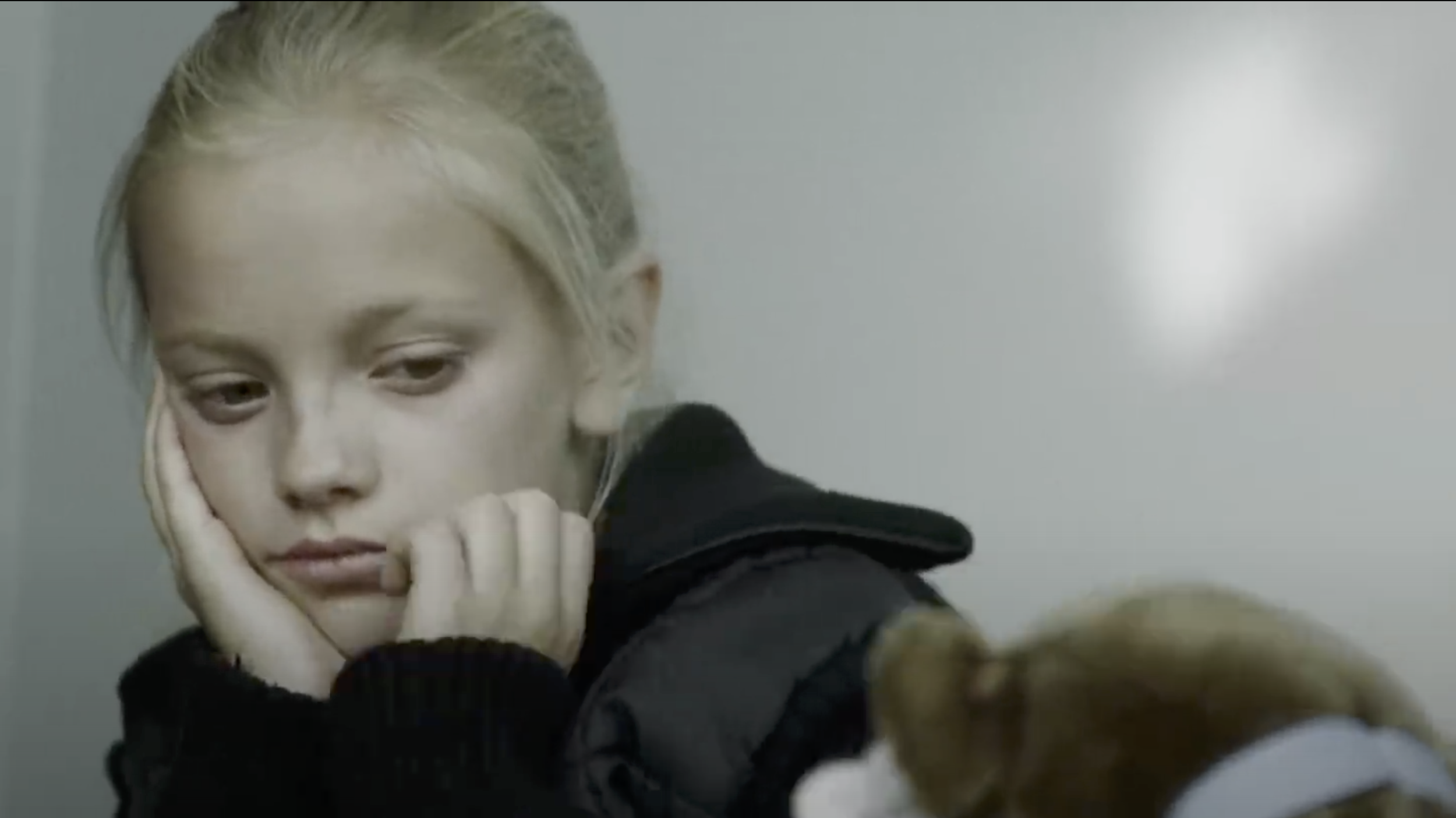
In this powerful short film from producers Nathanael Matanick and Christina Matanick, we witness the impact of domestic violence on a young girl.  The consequences of her caregivers’ violence are far-reaching.  The girl's world is shattered, her family breaks apart, and her life is turned up-side-down.   

This is trauma.

This film shows graphically how trauma fragments the world outside.  But it also depicts how the world within is injured.  Trauma undermines self-esteem and erodes trust,  setting the stage for difficulties ahead.

As difficult as it is to watch,  the film illuminates the core elements of trauma.  It offers a starting place for understanding, repair, and hope.

Stress in a Stressful Time

Even if your life before this year was relatively smooth sailing, likely, you are not making it through this year unscathed. After all, who could mentally prepared for civil unrest, unemployment, natural disasters, and a global pandemic all at once?

The dramatic events of 2020 are especially difficult for those with a trauma history. People with trauma include those whose past is marked by economic insecurity, frequent moving, homelessness, food insecurity, sudden or unexpected loss, or medical trauma.

Trauma survivors typically develop an “Early Warning System,” alerting against perceived danger. For example, suppose your parents fought a lot when you were a child. In that case, you are likely to be especially sensitive to tension, conflict, or discord around you. This additional sensitivity offers insight as to why today’s upheavals are incredibly stressful for trauma survivors.

 If this sounds like you or someone you know, what can you do?

Become fully aware of your feelings and name them.

If you’re watching the news at home and feel panic starting to flood your system, become consciously aware of your reactions. After acknowledging your feelings, recall that you have heightened sensitivity to current events because of your past traumas. Try watching the feelings as, in most cases, they will fade in time. Also, this is an excellent time to change your environment, like going for a walk.

Use your support system.

By putting your truth on the table with someone you trust and acknowledging the impact it’s having on you, you’re gaining control over the uncontrollable. You’re also modeling to others that it’s okay for them to share with you. If you have a limited support system, it might help do some resourcing online or in therapy.

Self-care is important.

Stretching, yoga, journaling, meditation, cooking, or watching comedy can help you feel safe and present. Taking good care of ourselves requires making your needs a priority. As we take better care of ourselves, we will show up as a better partner, parent, worker, and friend.  

If what helps you happens to be watching puppy videos on Instagram, please tag us so we can also enjoy a little puppy Prozac!

Be kind to yourself.

The world was stressful before 2020, and it certainly doesn’t seem to be winding down any time soon. Allow yourself to feel sad, scared, stressed, exhausted—whatever comes up. Give yourself time to acknowledge and validate these feelings. You may find it helpful to acknowledge at least one positive for every negative thing you noticed.Are you struggling to go back into the office? Remember that you now have half the traffic you used to  Struggling trusting yourself? Remember, it’s okay to not feel like the authority after your entire world has changed. Ask someone you trust what their honest evaluation is of the situation.

Making small adjustments like this work to help you to keep you in balance.

If there was ever an appropriate time to feel a little crazy, this is it. If you find that your internal alarms are going off an awful lot lately, remember you are hardly alone, and at least you know your system is working! Finally, if you are struggling to turn them off, we are happy to connect you with help. Feel free to call us at 866-522-2472 or drop us a line at bizoffice@birchcounseling.com.  


Canva - Hand Touching Glass.jpg

THRIVING DURING SOCIAL ISOLATION

Of all the adjustments we need to make during the COVID-19 pandemic perhaps the most challenging is learning to live with social isolation.  In this post I am sharing a link which features undoubtably an expert in social isolation, astronaut Chris Hadfield, who has spent many months on the International Space Station.  Hadfield encourages embracing these challenging times including enjoying the slower pace and perhaps learning something new.

Hadfield also points out that living on the International Space Station, like living through a pandemic, involves being isolated in a high-risk environment.  

https://www.youtube.com/watch?v=4uL5sqe5Uk8&feature=youtu.be

Hadfield offers the following key points:

Know the Risks.  Hadfield recommends that we go to a reliable source to understand “what is truly the risk you are facing.”  This clarity will help you stay balanced and “not be afraid of everything.”

Create Clear Goals.  Hadfield says it is important to set goals for the next day, next week, and month.  Goals give structure to your life.

Acknowledge your Constrains. Who is telling you what you need to do?  What financial resources do you have? What are your obligations?

Take Action. Once you are informed on actual risks and you have set your goals keeping in mind realistic constraints, take action.  Aside from taking care of your family and yourself, Hadfield suggest that you can try things you have never done before.  He points out that with the Internet and all that it allows access to “there is never been a better time to self-isolate.”

Sourced from:

Hadfield, C. (2020, March 21). An Astronaut's Guide to Self Isolation. Retrieved March 22, 2020, from https://www.youtube.com/watch?v=4uL5sqe5Uk8&feature=youtu.be

Canva - Blank Paper on the Table.jpg
Source: https://www.youtube.com/watch?v=4uL5sqe5Uk...

Accepting what is versus chasing happy

Somewhere, somehow most of us have learned that a happy life means never having to feel anything other than positive emotions.  When sadness visits, or anger, or disappointment, it feels sick, like something is wrong with us. It feels as though we are not enough, our lives are not enough.  We try to distract from negatives and chase happy feelings, only to fall short again and again.

What if we could learn to work with these “negative” feelings in a way that better informs us?  Accepting and being curious about the entire range of our emotions can help us become more compassionate, healthy and ultimately more resilient.  

Breaking news: Office Canine Willow loses mind over SNOW

As you all know, we had our first big snow of the season and Willow LOVED it. How can we tell? Uh, she ran through the white stuff in circles, jumped into the big piles…also ate it. She turns nine months on Dec. 6th and already weighs in at over 60 lbs. Willow will be sharing Thanksgiving with her parents and delight in snow as well as baked sweet potato treats. Feel free to ask our Office Manager Hannah for the recipe. Make sure to stop by Hannah’s desk in Golden Valley, say ‘hi’ to Willow (caution: expect to be showered with affection) and let her show off her favorite tattered toy.

As for recent accomplishments: Willow graduated from intermediate obedience and begins advanced training in January. She will then be able to take the Canine Good Citizenship test and begin therapy dog training. Yay, Willow!

Sun Sailor introduces Birch Counseling Walk-In

Birch Counseling in Hopkins offers same-day, walk-in mental health counseling

By Kristen Miller kristen.miller@ecm-inc.com

To address the lack of immediate mental health counseling options in the Twin Cities, Birch Counseling has opened a dedicated same-day, walk-in clinic at 904 Mainstreet in downtown Hopkins.

“What we are offering is akin to urgent care for mental health,” explains Christa Surerus, licensed professional clinical counselor.

She and her husband, James Mallon, also a licensed mental health counselor, operate three other Birch Counseling locations with an office in Golden Valley and two offices in Minneapolis.

However, they wanted to provide greater flexibility and accessibility for those in crisis.

“Currently, it takes about three weeks to get into Golden Valley, and that’s very common with just about any counseling service,” Surerus said

“Up until now, if someone was experiencing a mental health crisis, that person would have to choose between scheduling an appointment for a later date, which could be days or weeks away, or going to an emergency room, which is really meant for life-threatening situations,” she said. “We are filling in that gap for when those unexpected issues in life become too much.”

They have seen that the demand for care, having witnessed people walking through closed-door sessions in order to be seen, and decided they needed to do something about it by making mental health care more readily available.

With 12 offices, people can walk in and expect to be seen that same day.

“There are so many people who are dealing with these sorts of traumatic situations that can come up very suddenly,” Mallon said. “We are here for them today. Not tomorrow. Not next week. Today.”

The most important reason they opened the walk-in clinic is to help combat the rising number of suicides in Minnesota.

“As you may know, suicide rates around the country have been going up, and Minnesota is one of the top gainers,” Surerus said.

According to the Minnesota Department of Health, the suicide rate has increased 53 percent from 1999-2017.

Surerus also noted that 85% of males who die by suicide have no known mental health condition, “which means they never sought professional help,” she said. Completed suicides by females are also on the rise, she said.

“It is our goal to offer a safe place for individuals, families and couples to get the support they need by helping them calm and stabilize sufficiently to problem solve life challenges,” she said.

Birch Counseling also has the capacity to grow and expand its hours.

Currently, they are open 10 a.m. to 6 p.m. Monday through Friday, with hopes of offering evening and weekends hours in the fall.

They accept all major insurance, medical assistance and out-of-pocket payments.

To make an appointment, call 952-562-4116 or visit birchcounselingwalk-in.com.

Follow the Sun Sailor on Facebook at facebook.com/mnsunsailor.


Source: https://www.hometownsource.com/sun_sailor/...

Twinc Cities Business Magazine features Birch Counseling Walk-In Clinic

HEALTH CARE

Birch Counseling Launches Walk-in Mental Health Clinic

Owner Christa Surerus sees it as ‘urgent care’ for mental health crises.

MAY 23, 2019

DAN NIEPOW

Birch Counseling last week opened a walk-in mental health clinic in Hopkins. 

The clinic is intended to address mental health issues on a quicker time frame than traditional therapy. 

Before the clinic’s opening, Birch Counseling providers had been struggling to meet increasing demands for services, says owner Christa Surerus.

At the company’s Golden Valley clinic, for instance, every provider has a three-week waitlist.

“It is quite frankly difficult to keep up with demand,” Surerus says. “We noticed there’s a huge gap in our community between what people need and what’s actually offered as far as mental health services.”

The clinic is aimed at serving folks “whose worlds have fallen apart,” she says. That could include people who have just lost a job or received a dire health diagnosis.

Surerus sees her clinic as a sort of “urgent care” for mental health crises. She believes it's the only clinic of its kind in Minnesota.

The clinic accepts all forms of major insurance, though it doesn’t yet have a contract with Medicare, according to Surerus.

For those who want to pay for services out of pocket, the cost is $120 to see a licensed provider. For $95, clients also can opt to see providers working toward licensure.

Mental health issues and suicidal behavior often go hand-in-hand, according to Surerus. What’s more, the uptick in demand for more services locally is emblematic of larger issues brewing across the nation. According to data from the Centers for Disease Control and Prevention, about 45,000 Americans died by suicide in 2016, marking a 25 percent increase since 1999.


Source: http://tcbmag.com/news/articles/2019/may/b...

Minneapolis and St. Paul Business Journal features Birch Counseling Walk-In

By Alex Wittenberg  – Staff writer, Minneapolis / St. Paul Business Journal 

May 29, 2019, 2:58pm EDT

People in the Twin Cities suffering from a mental health-related condition have a new option for treatment. 

Birch Counseling on May 15 opened a walk-in mental health clinic in Hopkins that provides same-day counseling services to patients. The service, the first of its kind in the Twin Cities, according to Birch, hopes to make mental health treatment more accessible. 

"Our clinic in Golden Valley has a three-week waitlist, and that's just not good enough," said Christa Surerus, founder and owner of Birch Counseling. "People are calling in with very urgent needs, and they can't wait even a week to be seen. We're trying to close that gap."

The clinic, located at 904 Main St. in Hopkins, has four dedicated counselors on staff. As demand for the service increases, Birch plans to have as many as 40 staff members working extended hours at the clinic, Surerus said. 

Surerus expects the clinic to treat people who feel overwhelmed by grief, sadness or worry. One recent patient was a woman who was struggling going about daily life after the death of her partner. Other patients, for example, may feel unsettled over job and housing precarity or a serious health diagnosis they have to share with their family, Surerus said. 

"We wanted to make it accessible in the terminology we use," she said. "Very rarely do people wake up at 3 a.m. and say, 'Oh my god, I need to see someone, I have anxiety.' Most of they time they don't know they have anxiety. They just know they're worried." 

Birch works with most major insurance plans. The out-of-pocket cost for an appointment with a licensed counselor at the new clinic is $120.

Source: https://www.bizjournals.com/twincities/new...