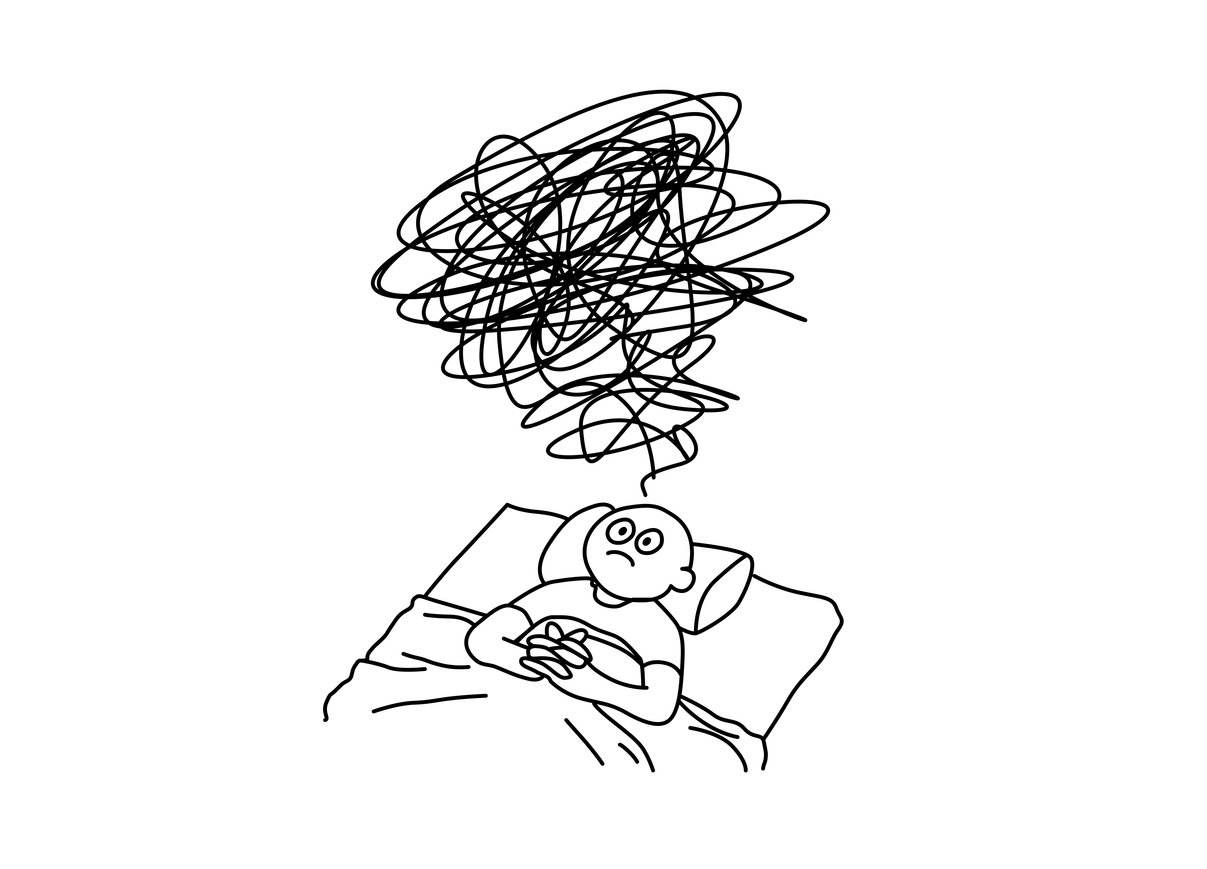
Chronic insomnia affects a large portion of adults—difficulty falling asleep, staying asleep, or waking too early, with daytime impairment lasting at least three months. While sleep medications can offer short-term relief, they often come with tolerance, dependence, next-day effects, and rebound insomnia when stopped. Guidelines from the American College of Physicians, American Academy of Sleep Medicine (AASM), and European sleep societies recommend Cognitive Behavioral Therapy for Insomnia (CBT-I) as the first-line treatment for chronic insomnia disorder, ahead of medications.
CBT-I is a structured, short-term psychological treatment (typically 4–8 sessions) that targets the thoughts, behaviors, and habits that keep insomnia going. It works whether insomnia is the primary problem or occurs alongside other conditions such as anxiety, depression, or chronic pain. Roughly 70–80% of people experience clinically meaningful improvement, and about half reach full remission. Gains often persist or continue improving for months to years after treatment ends—unlike medications, whose benefits typically fade when the pills stop.
Core Components of CBT-I
CBT-I is multicomponent. The strongest evidence supports these elements:
Stimulus control: Rebuild the association between bed and sleep. Go to bed only when sleepy, use the bed only for sleep (and sex), get out of bed if you can’t sleep after about 15–20 minutes and return only when sleepy, and keep a consistent wake time every day (including weekends). This breaks the link between the bedroom and wakefulness, frustration, or worry.
Sleep restriction (or sleep compression): Match time in bed more closely to actual sleep time to build stronger sleep drive and consolidate sleep. Using a sleep diary, calculate average total sleep time and set a limited “sleep window.” Gradually expand the window as sleep efficiency improves (usually aiming for ≥85%). This is often one of the most potent components for improving sleep continuity and quality, though it can cause temporary daytime sleepiness early on.
Cognitive restructuring: Identify and challenge unhelpful beliefs about sleep (“I must get 8 hours or tomorrow is ruined,” “I’ll never sleep normally again”). Replace them with more realistic, flexible thoughts. This reduces pre-sleep arousal and the anxiety that fuels insomnia.
Sleep education / hygiene: Information about sleep regulation, circadian rhythms, and practical habits (consistent schedule, limiting caffeine/alcohol/nicotine close to bedtime, managing light and temperature). Sleep hygiene alone is usually not enough but supports the other techniques.
Relaxation training (progressive muscle relaxation, breathing, mindfulness) is sometimes included. Evidence for it as a standalone or essential component is mixed; some analyses suggest it adds little or can even be less helpful in certain packages.
Patients typically track sleep with diaries so the therapist (or program) can personalize the sleep window and monitor progress. Most people notice improvements within 6–8 weeks.
Why CBT-I Beats Medication Long-Term
Short-term effects of CBT-I are comparable to (or better than) hypnotic medications for sleep latency, wake after sleep onset, and sleep efficiency. The decisive advantage is durability: benefits hold up at follow-ups of 6–24 months or longer, while medication effects generally do not. CBT-I also helps reduce reliance on sleep aids and can improve comorbid symptoms such as mild depression or anxiety. Side effects are minimal (mainly temporary fatigue or irritability during sleep restriction). Sleep restriction may need caution in people with certain occupations, seizure risk, or bipolar disorder.
Recent AASM guidance supports combining CBT-I with medication in some cases over medication alone, but does not recommend routine combination over CBT-I by itself for most patients.
iCBT: Bringing CBT-I Online
Access to trained CBT-I therapists remains limited. Internet-delivered or digital CBT-I (iCBT, dCBT-I) solves much of that problem. These programs deliver the same core components through websites or smartphone apps—interactive modules, sleep diaries, automated feedback, and sometimes therapist support via messaging or brief calls.
Meta-analyses of dozens of randomized trials (thousands of participants) show that iCBT significantly reduces insomnia severity, shortens sleep onset latency, decreases time awake after sleep onset, improves sleep efficiency, and increases total sleep time. Effects appear both immediately after treatment and at follow-up. Fully automated (unguided) programs can produce medium-to-large effects; guided versions and in-person delivery often rank highest, but digital options still outperform waitlists or basic education by a clear margin.
Digital CBT-I is scalable, lower-cost, available on demand, and private. Popular evidence-based programs include fully automated apps and platforms that have been tested in large trials. Engagement and adherence matter—completing the modules and consistently applying the techniques drives results. Some people still prefer or need in-person or therapist-supported care, especially with complex comorbidities.
Who Benefits and Practical Next Steps
CBT-I and iCBT help adults with chronic insomnia, including older adults and those with co-occurring conditions. It is not a quick fix or a substitute for evaluating medical contributors (sleep apnea, restless legs, medications, pain, etc.). A clinician can rule out or treat those first.
If you’re considering CBT-I:
Ask a primary care doctor, sleep specialist, or mental health provider for a referral to a trained CBT-I therapist.
Explore validated digital programs (some are available through health systems, employee benefits, or direct-to-consumer with clinical evidence behind them).
Start a simple sleep diary for 1–2 weeks: bedtime, rise time, estimated sleep time, awakenings, and daytime functioning. This data is gold for any form of CBT-I.
Be prepared for temporary sleepiness with sleep restriction—plan accordingly and discuss safety with a professional.
If you feel you could benefit from professional guidance, we are happy to help. Call (866) 522-2472 to schedule an appointment.
Insomnia is treatable. CBT-I (and its digital versions) teach skills that restore natural sleep regulation rather than masking the problem. For many people, the result is not just better nights, but more reliable energy, mood, and daytime performance that last. If poor sleep has become a chronic struggle, evidence-based behavioral treatment is one of the highest-value steps you can take.