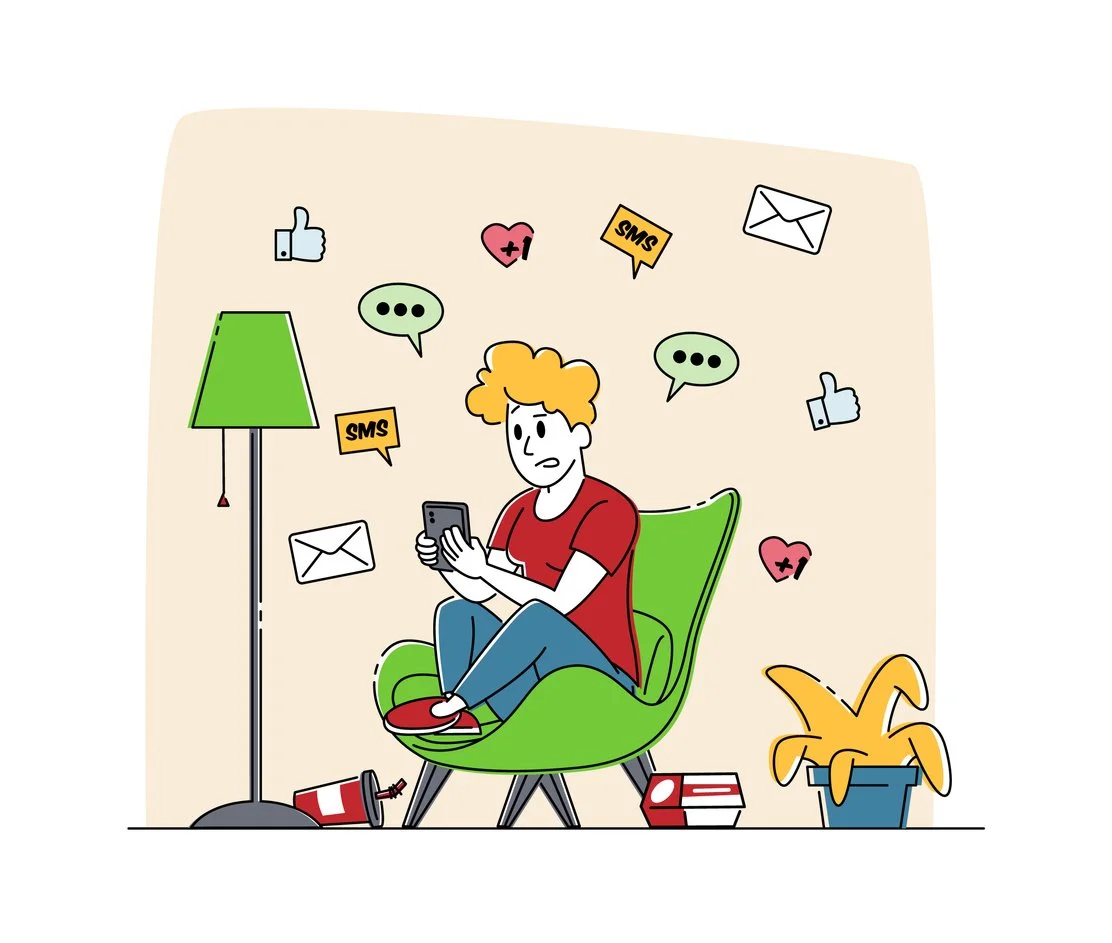
In the past decade, social media has evolved from a place to share photos and updates into a dominant force shaping how young people think, feel, and connect. For many kids and teens, platforms like TikTok, Instagram, and Snapchat are woven into the rhythm of daily life. But alongside creativity and community, a growing body of research points to something else: shortened attention spans, heightened anxiety, and new pressures on mental well-being.
This isn’t about blaming teens or demonizing technology. It’s about understanding a landscape that’s changing faster than our ability to keep up — and learning what kids need to stay emotionally healthy in a world of infinite scrolling.
The Attention Paradox: Endless Stimulation, Shrinking Focus
Short-form video platforms have redefined how young people consume information. Content is fast, punchy, and often highly stimulating — exactly what our dopamine-driven brains find irresistible.
But the very features that make these platforms engaging also make them hard to disengage from:
Rapid-fire content trains the brain to expect novelty every few seconds. This constant switching can reduce the tolerance for slower, deeper forms of focus — like reading, problem-solving, or sustained conversation.
Algorithms reward impulsivity, pulling users toward whatever grabs attention fastest rather than what is most meaningful.
Notifications create intermittent reinforcement, a psychological mechanism that keeps users checking reflexively.
Over time, this can leave young people feeling scattered, restless, or “mentally overloaded,” even when they aren’t actively using social media.
Anxiety in a Connected World
While social media can offer connection and support, it also amplifies classic anxiety triggers — especially for sensitive or developing minds.
1. Constant comparison
Teens are exposed to a curated world of perfect bodies, perfect relationships, and perfect accomplishments. Even when they know it’s curated, the emotional impact is real.
2. Fear of missing out
Staying offline for even a few hours can trigger worry about falling behind socially or missing something important.
3. Social performance pressure
Teens today are expected not only to participate socially, but to perform: post regularly, maintain an online identity, stay in the loop, reply quickly.
4. Hyperawareness of negative content
Exposure to world crises, violence, bullying, or beauty standards can heighten stress, especially when the stream never stops.
All of this results in a heightened baseline of anxiety — the kind that doesn’t necessarily look like panic attacks but instead shows up as irritability, sleep struggles, avoidance, or emotional exhaustion.
Mental Health in the Age of Algorithms
Perhaps the most concerning trend is how many young people now turn to social media for mental-health advice and self-diagnosis. While sharing personal stories can reduce stigma, not all content is accurate or safe.
Some of the biggest risks include:
Self-diagnosis based on short lists or trending labels
“Aestheticized” depictions of mental illness that minimize severity or romanticize suffering
Echo chambers that reinforce distressing beliefs
At the same time, many teens feel more comfortable seeking emotional validation from online communities than from adults in their lives. This can be supportive — but it can also delay professional help when needed.
It’s Not All Bad — But It Isn’t Neutral
Social media isn’t inherently harmful. It gives many young people:
A sense of belonging
Creative outlets
Access to supportive peers
Spaces to talk about mental health openly
But the cost comes when time online displaces sleep, in-person relationships, movement, boredom, or reflection — essential elements of healthy development.
The key is balance, intentionality, and adult involvement.
What Helps? Practical Steps for Parents, Educators, and Teens
1. Practice “co-regulation” instead of surveillance
Teens respond far better to collaboration than control. Instead of banning apps, talk about how certain content makes them feel.
2. Encourage “digital hygiene”
Creating tech-free zones
Charging devices outside the bedroom
Setting intentional “scrolling windows”
3. Model healthy tech behavior
Kids notice when adults are glued to screens too.
4. Support real-world activities
Sports, hobbies, friendships, and unstructured downtime all strengthen attention and emotional resilience.
5. Teach media literacy
Understanding algorithms and dopamine loops helps teens navigate them more consciously.
6. Make mental health support accessible
Normalize therapy, counseling, and open communication long before problems escalate.
A Healthier Digital Future Is Still Possible
Social media isn’t going away, and young people aren’t wrong to want to be part of online culture. The goal isn’t to divide them from technology but to equip them with the skills, boundaries, and self-awareness needed to thrive within it.
With guidance from adults who understand the landscape — and with ongoing conversations about mental health, attention, and emotional balance — teens can learn to use social media in a way that enriches rather than diminishes their well-being.
The future of youth mental health depends not on rejecting digital spaces but on creating a world where young people feel supported both online and off.
If you feel that professional support could be helpful, we’re here for you. Call us at (866) 522-2472 to schedule an appointment with one of our therapists.